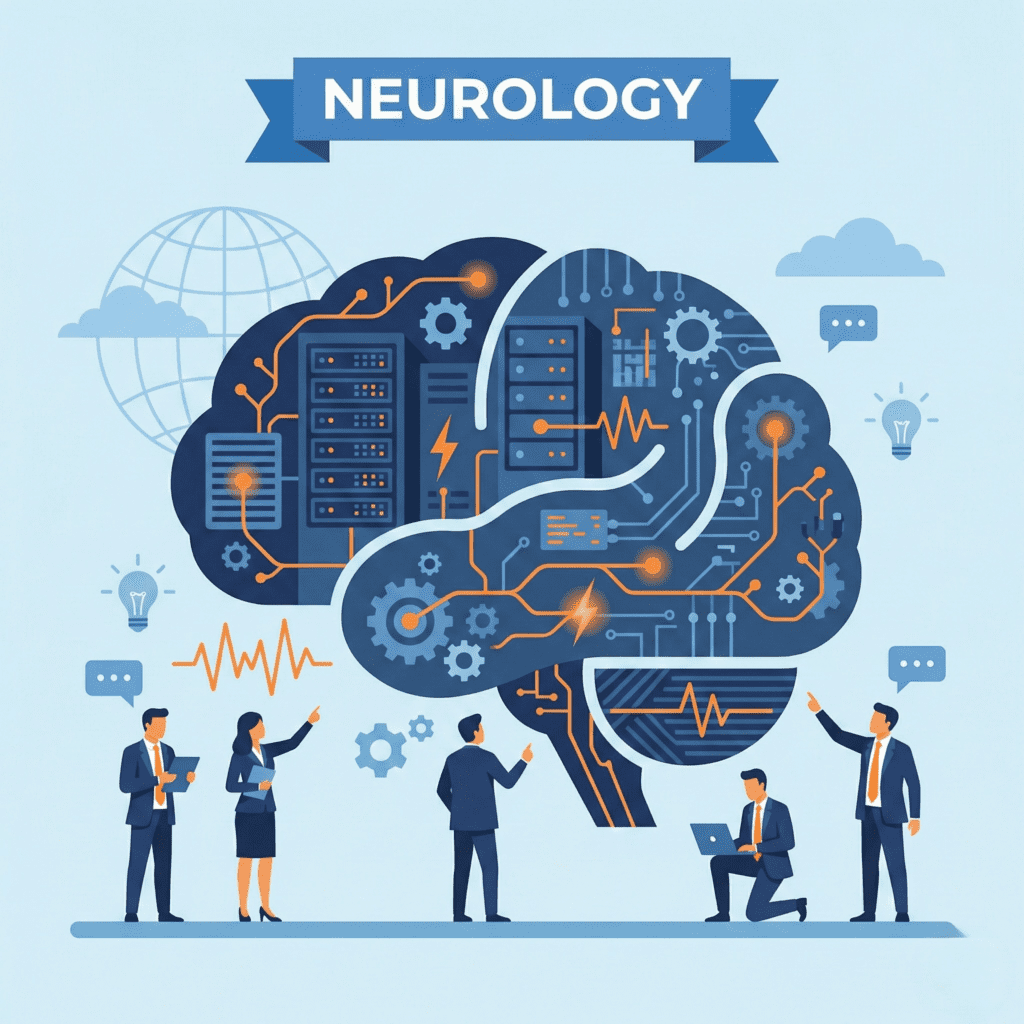
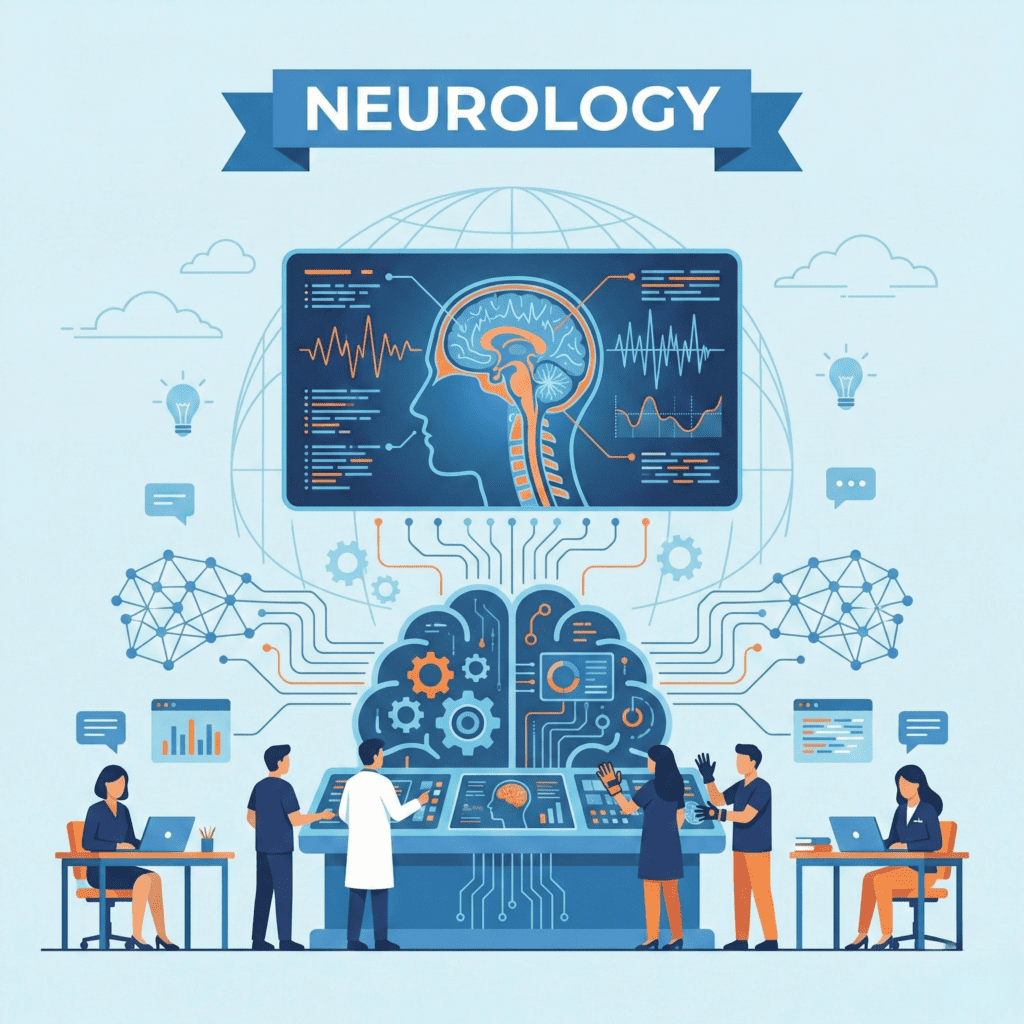
Neurology practice management software handling complex diagnostics and chronic disease management

Neurology EHR practices manage chronic conditions requiring longitudinal tracking, perform diagnostic studies needing interpretation documentation, and coordinate multidisciplinary care across specialists. Generic EHR systems lack neurological examination templates and medication titration tracking. Basic billing software misses electrodiagnostic procedure bundling rules and infusion billing requirements. Harris CareTracker delivers practice management software built specifically for neurology workflows where diagnostic precision determines treatment and documentation completeness protects revenue.

Neurology EHR

Why Choose Us?

compliant

HIPAA Compliant with Neurology EHR Specific Templates

Neurology EHR

EEG & EMG Integration

revenue cycle management

Automated Neurology Revenue Cycle

Comprehensive neurological examination documentation

Neurological examination requires systematic assessment across multiple domains. Mental status, cranial nerves, motor function, sensory testing, reflexes, coordination, gait, and station. Each component supports diagnostic reasoning and treatment decisions.

Harris CareTracker neurological examination templates ensure systematic documentation supporting appropriate evaluation level coding.

Complete neurological examination documents mental status including orientation and cognition, cranial nerve assessment II through XII, motor strength testing by muscle group, sensory examination to light touch and pinprick, reflex testing with grading, coordination with finger to nose and heel to shin, gait observation, and Romberg testing.

Templates organize examination by system. Dropdowns for common findings. Abnormality documentation with detailed description. Lateralization when applicable. Comparison to prior examinations when relevant.

Systematic examination templates support appropriate evaluation and management coding levels while ensuring clinical completeness.

Not every visit requires complete neurological examination. Headache follow up needs focused assessment. Peripheral neuropathy visit emphasizes sensory and reflex testing. Movement disorder assessment details tremor and rigidity.

Complaint specific templates capture relevant examination elements without unnecessary documentation burden.

Focused templates improve documentation efficiency while maintaining clinical appropriateness.

Neurology EHR

Longitudinal Tracking for Neurological Conditions

Chronic neurological diseases require systematic monitoring. Seizure frequency and medication response. MS relapse patterns and disability progression. Parkinson symptom control and medication complications. Headache frequency and trigger identification.

Disease specific tracking tools visualize trends enabling treatment optimization.

EMG and Nerve Conduction Study Documentation and Billing

Electrodiagnostic testing including EMG and nerve conduction studies requires detailed documentation supporting medical necessity and complex billing with bundling rules.

Nerve conduction study documentation

NCS measures nerve function through electrical stimulation and recording. Motor nerve conduction, sensory nerve conduction, F wave, and H reflex studies. Each nerve tested requires documentation of latency, amplitude, and conduction velocity.

Templates capture nerve tested, stimulation sites, recording sites, measured values, normal ranges, and interpretation of abnormalities.

Complete NCS documentation supports medical necessity and appropriate coding for each nerve tested.

Electromyography needle examination documentation

EMG needle examination assesses muscle electrical activity at rest and with contraction. Insertional activity, spontaneous activity including fibrillations and fasciculations, motor unit morphology, and recruitment pattern.

Each muscle examined requires documentation of findings. Abnormality patterns determine neurogenic versus myopathic processes.

Systematic EMG documentation supports differential diagnosis between radiculopathy, neuropathy, myopathy, and neuromuscular junction disorders.

Infusion therapy documentation

Infusion administration documents drug name and dose, start and stop times, vital sign monitoring, adverse reaction assessment, and post infusion observation. Pre medications given. Nursing time and monitoring.

Complete infusion documentation supports medical necessity and time based administration billing.

Infusion Therapy Billing with Time-Based Codes

Infusion billing uses initial hour code, sequential hour codes, and additional drug codes when multiple agents given. Missing time based progression loses significant revenue.

Billing automation calculates infusion duration. Applies initial hour code for first 31 minutes. Adds sequential hour codes for additional time. Multiple drug administration codes when applicable.

Accurate infusion billing captures full revenue for nursing time and drug administration.

Electroencephalography Integration and Interpretation

EEG monitors brain electrical activity for seizure diagnosis and management. Routine EEG, prolonged monitoring, ambulatory EEG, and video EEG monitoring require interpretation documentation.

Integration with EEG equipment imports tracings. Interpretation templates document background activity, focal abnormalities, epileptiform discharges, and seizure events if captured.

EEG interpretation documentation supports diagnosis and treatment decisions while ensuring appropriate billing for professional interpretation.

Document Neurology Encounters During Examination and History Taking

Neurological examinations require both hands for reflex testing, coordination assessment, and strength evaluation. Detailed neurological histories involve complex symptom characterization. Typing during clinical assessment interrupts examination flow and patient rapport.

Amplify by Harris CareTracker captures neurology EHR encounters through ambient listening. Record the visit. Verbally describe examination findings during assessment. Discuss symptom patterns conversationally. AI transcription organizes into neurology documentation structure. Review and finalize minutes later.

Neurological examination involves sequential testing across multiple domains. Describing findings verbally during examination enables real time documentation without interrupting clinical flow.

Speak examination findings while testing. Cranial nerve results. Strength grades by muscle group. Sensory responses. Reflex grades. Coordination performance. Gait characteristics. AI captures and organizes by examination system.

Complete neurological examination documentation without stopping between tests to type. Examination flow maintains while documentation happens simultaneously.

Neurological histories require detailed symptom characterization. Seizure semiology with aura, motor activity, consciousness level, duration, and post ictal symptoms. Headache characteristics with quality, location, duration, frequency, triggers, and associated symptoms. Sensory symptoms with distribution, character, and progression.

Ambient listening captures complex histories through conversational flow. Patient describes symptoms in their words. You clarify with specific questions. Symptom timeline emerges through discussion. AI structures into history of present illness organized by neurological system.

Detailed neurological histories without extensive typing. Conversational flow maintains while comprehensive documentation captures.
Chronic disease follow ups involve reviewing interval symptoms, assessing medication effectiveness, monitoring side effects, reviewing lab results, and adjusting treatment. Documentation requirements extensive for complex neurological conditions.

Ambient listening captures management discussions. Patient reports seizure frequency. You discuss medication adherence and side effects. Lab results review occurs verbally. Treatment adjustments explained. AI documents entire discussion organized by chronic disease management elements.

Efficient chronic disease documentation enabling focus on patient interaction rather than typing. Comprehensive notes without extending visit duration.

Neurology EHR

Neurology EHR and Practice Management Built for Diagnostic Complexity and Chronic Disease Tracking

Generic software ignores neurology reality. Chronic disease tracking requires scattered note review. Electrodiagnostic billing misses bundling rules losing revenue. Infusion therapy coding errors cost hundreds per treatment. Neurological examination templates lack specialty specificity.

Harris CareTracker eliminates these problems. Disease tracking flowsheets monitor conditions longitudinally. Electrodiagnostic billing applies correct bundling. Infusion therapy coding captures all components. Neurology templates accelerate documentation. Amplify ambient listening documents during examinations.

Stop fighting software designed for primary care. Start operating with infrastructure built for neurologists.

What Our Customers Say About Us

We chose Harris CareTracker for our office because of its cost-effectiveness and since changing to them, we have seen a significant increase in our monthly savings. The standout feature has been the excellent customer support and training!

Tara Warnock

Tara Warnock

Billing Specialist | Naples Vascular Specialists

It’s really easy to use Harris CareTracker Practice Management. Very easy to learn.

Lauren O'Brien

Lauren O'Brien

Billing Manager | New England OB/GYN

We have used Harris CareTracker in our practice for 5 years, and it has been a wonderful experience. The trainers and on-going support teams are knowledgeable, accessible, and quick to respond to queries. They provided easy-to-follow step-by-step guidance for using the software. They never failed me. I highly recommend CareTracker for practices of any size.

Linda S. Erickson

Billing Specialist | John A. Nassar, MD

Get Started Today​

Connect With Us

Where here for anything you need, just drop a line and we’ll get back to you.

Harris CareTracker
Privacy Overview

This website uses cookies so that we can provide you with the best user experience possible. Cookie information is stored in your browser and performs functions such as recognising you when you return to our website and helping our team to understand which sections of the website you find most interesting and useful.