Denial Management for Billing Companies
Prevention before submission, context on the denials landing, and reporting proving your SLA to every client.
Why Choose Us?

No Hidden Fees

No Surprise Pricing

Real Support from People Who Know Medical Billing
A Client's Denial Rate Is Your Reputation
Denials are more than delayed revenue. Across a book of clients, a rising denial rate is the reason a practice starts shopping for a new biller. The owner who prevents denials keeps clients. The one who only chases them after the fact spends the month firefighting and still loses the account.
Most denials trace back to a small number of root causes: eligibility not verified, a coding or NCCI edit missed, a payer rule changed quietly, a provider not yet enrolled. Fix the cause and the pattern stops. Rework the symptom and it comes back next week under the same payer and the same code.
What the Platform Does

Prevention Before the Claim Goes Out
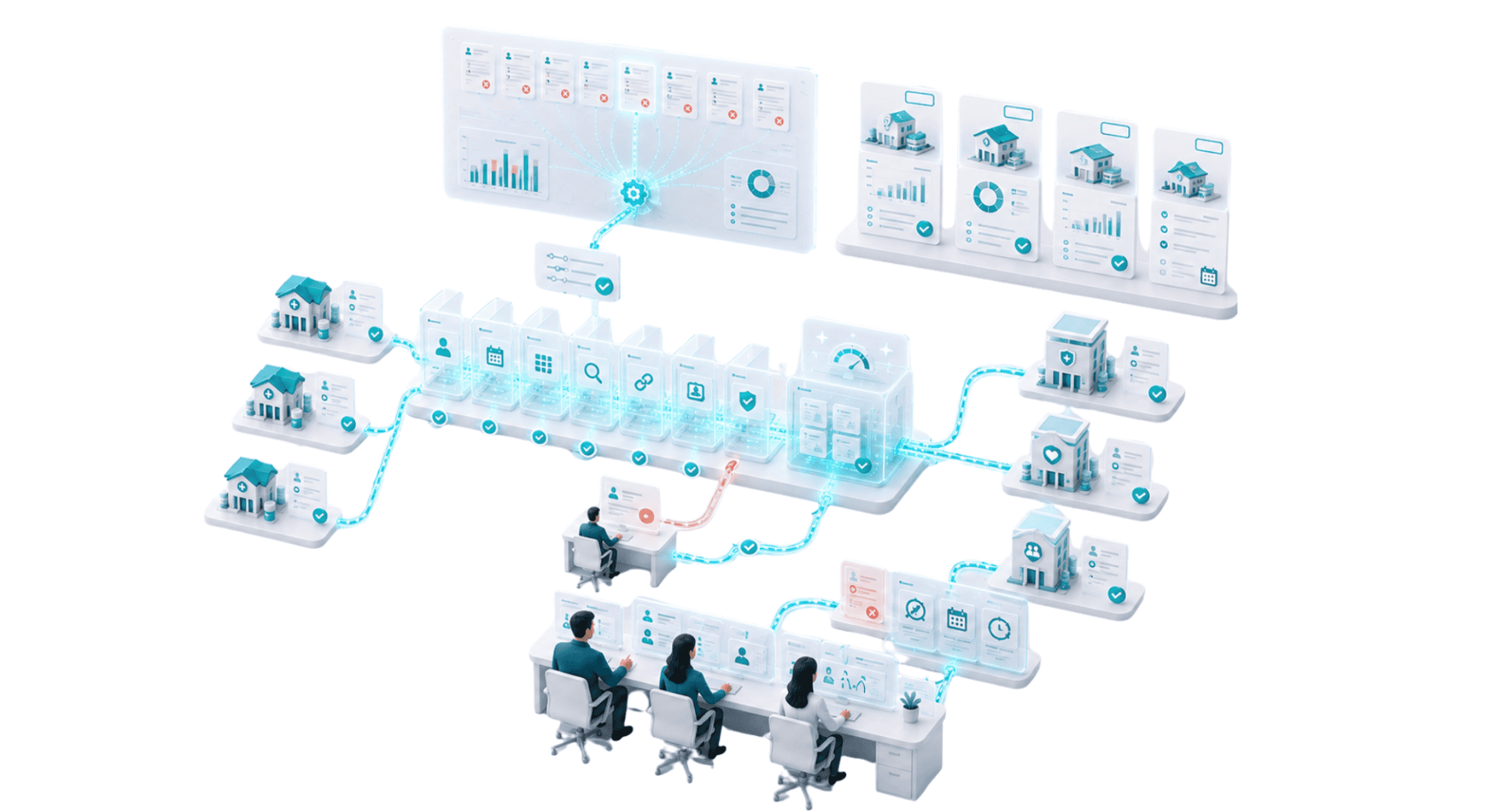
Batch eligibility verification 270/271 runs before the visit, and scrubbing checks every claim against NCCI edits and payer rules before submission. The denials most operations spend their month working simply never get created.

AI Flags on High Risk Claims
AI powered capabilities score submissions against historical claims data and flag the ones most likely to be denied, so a person looks before they leave. This is where the denial rate drops without adding staff.

Denials Routed With Context, Not to a Queue
When a claim is denied, the workflow routes it to the right biller with the reason code, the payer, and the history attached, rather than dropping it in a shared pile. The person who works it starts with everything they need to fix it once.

Root Cause Analysis Across Payers
When the same denial code shows up across a payer, the platform surfaces the pattern so you fix the cause for every future claim, not only the one in front of you. Same payer, same code, same root cause, solved once.

Client Facing Denial Reporting
Report denial rate by payer, top denial reasons, and what you did about each, on a schedule, under your brand. Clients who see the work and the numbers stay.
Prevent First, Then Work What Lands
Eligibility and NCCI checks stop the common causes before submission.
AI scoring pulls high risk claims for a look before they go out.
A denial landing reaches the right biller with reason code and history attached.
A payer pattern gets solved once, for every future claim under the rule.
The Numbers It Moves
Denial rate falls because prevention catches the common causes and AI flags the rest. Clean claim rate rises toward the mid to high 90s. Days in A/R drops as fewer claims stall in rework, and net collection rate climbs as denials once written off get reversed.
Where Denials Come From, and How to Stop Them
Most denials trace to a short list of causes. Close these and your clients’ denial rate falls.
- Eligibility not verified before the visit
- Coding errors or NCCI edits missed before submission
- Prior authorization not obtained or not on the claim
- Provider not credentialed or enrolled with the payer
- Timely filing deadline missed
- Duplicate claims or missing documentation
Go Deeper on the Decision
Related guides on choosing and running your platform.
- How to Choose an EHR for Your Primary Care Practice
- How Much Does an EHR Cost for a Small Practice
- How to Get Medical Billing Clients
- Switch Medical Billing Software Without the Risk
- Medical Billing Clearinghouse and Claim Management
- Medical Biller Productivity and Staffing
- How to Grow Your Medical Billing Company
- How to Start Medical Billing Company
- Medical Billing Service Pricing Guide
- Medical Billing Software for RCM Companies
Why HARRIS CareTracker
Prevention and denial work sit in the same platform, across every client, so you are not wiring a scrubbing tool to a denial tracker to a reporting spreadsheet. HARRIS CareTracker is part of HARRIS Healthcare.
The point is to stop working denials one at a time. Prevention at the front, AI flags on the risky claims, and root cause analysis on the patterns turn denial management from a monthly firefight into a system growing quieter over time.
Who it is for. This fits a billing company whose clients judge it on denial rate and clean claim rate, and whose team is spending too much of the month reworking claims never denied in the first place.
Lower your Clients' Denial Rate without Adding Headcount
Book a walkthrough of denial prevention, the AI flags, and the denial management workflow in HARRIS CareTracker, and see the reporting your clients would receive under your brand.
FAQs
How do I keep my clients' denial rate low?
What are the most common reasons claims get denied?
What is a good denial rate benchmark?
What clean claim rate should I promise my clients?
What is denial management?
How do I appeal a denied claim?
What is root cause analysis for denials?
How do I report denials and A/R back to my clients?
How much do denied claims cost a billing operation?
What Our Customers Say About Us
We chose HARRIS CareTracker for our office because of its cost-effectiveness and since changing to them, we have seen a significant increase in our monthly savings. The standout feature has been the excellent customer support and training!

Tara Warnock
Billing Specialist | Naples Vascular Specialists
It’s really easy to use HARRIS CareTracker Practice Management. Very easy to learn.

Lauren O'Brien
Billing Manager | New England OB/GYN
We have used HARRIS CareTracker in our practice for 5 years, and it has been a wonderful experience. The trainers and on-going support teams are knowledgeable, accessible, and quick to respond to queries. They provided easy-to-follow step-by-step guidance for using the software. They never failed me. I highly recommend CareTracker for practices of any size.
Linda S. Erickson
Billing Specialist | John A. Nassar, MD
Get Started Today
Connect With Us
We are here for anything you need, just drop a line and we’ll get back to you.