Pulmonology depends on testing. When spirometry, full PFT results, DLCO, and sleep studies live in separate systems, someone has to gather and re enter them before the pulmonologist can act. That gap delays decisions and introduces transcription error into the numbers that drive treatment.
Pulmonary practices also carry a chronic disease load that a general chart does not organize well. COPD and asthma patients need longitudinal trending, oxygen qualification documentation, and follow up intervals that nobody should be tracking on paper. Add a sleep line and a general EHR starts splitting the same patient across two records.
HARRIS CareTracker keeps testing, visits, and chronic respiratory management in one place, so results sit in the record where the pulmonologist is already working.
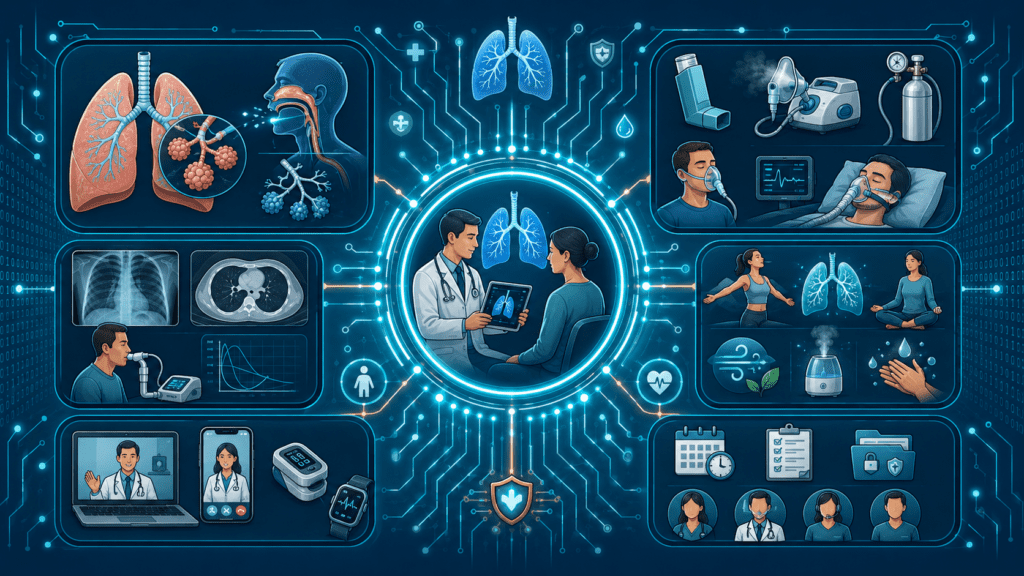
Spirometry, full PFT, DLCO, and six minute walk results flow into the record through device and lab interfaces rather than arriving as a PDF someone has to file. Values are discrete and trendable, so decline over time is visible in the chart instead of reconstructed from prior reports.
A pulmonology EHR with sleep medicine support keeps the sleep line of the practice in the same record as respiratory care. In lab polysomnography and home sleep apnea test results, titration studies, and PAP adherence data stay attached to the same patient a practice already treats for COPD or asthma.
Longitudinal tracking for chronic respiratory conditions, with care plan documentation and time tracking that supports chronic care management billing. Exacerbation history, medication changes, and oxygen qualification documentation stay in one place rather than scattered across visit notes.
Testing and evaluation and management services bill from the same system that documented them. Charges post from the encounter, claims are scrubbed before submission, and real time eligibility verification catches coverage problems before a study is performed rather than after the claim is denied.
Ambient listening drafts the note from the conversation, so a complex respiratory history does not turn into an hour of after hours charting.
HARRIS CareTracker connects the clinical record, scheduling, and pulmonology medical billing in a single cloud suite. Your practice runs care and revenue from one database, with practice management and revenue cycle tracking working from the same data instead of two systems that reconcile badly at month end.
Thirty years of building software for specialty practices went into this, including the ones where the diagnosis lives in a number that came off a machine.
HARRIS CareTracker organizes respiratory testing, keeps sleep medicine in the same system, and keeps your pulmonology practice on one platform. Bring us your actual testing workflow and we will run the pulmonology EHR against it.
Yes. CareTracker supports spirometry and pulmonary function test result capture so values flow into the record.
The system supports sleep study (polysomnography) ordering, result capture, and the associated coding.
CareTracker supports common pulmonology procedure coding, including spirometry (94010) and related pulmonary function services.
The system supports the documentation used for oxygen and durable medical equipment (DME) orders.
We chose HARRIS CareTracker for our office because of its cost-effectiveness and since changing to them, we have seen a significant increase in our monthly savings. The standout feature has been the excellent customer support and training!
It’s really easy to use HARRIS CareTracker Practice Management. Very easy to learn.
We have used HARRIS CareTracker in our practice for 5 years, and it has been a wonderful experience. The trainers and on-going support teams are knowledgeable, accessible, and quick to respond to queries. They provided easy-to-follow step-by-step guidance for using the software. They never failed me. I highly recommend CareTracker for practices of any size.
We are here for anything you need, just drop a line and we’ll get back to you.